The Ultimate Guide to Structural Steel Fabrication in Surat
- nationalengg1990
- Feb 23
- 6 min read
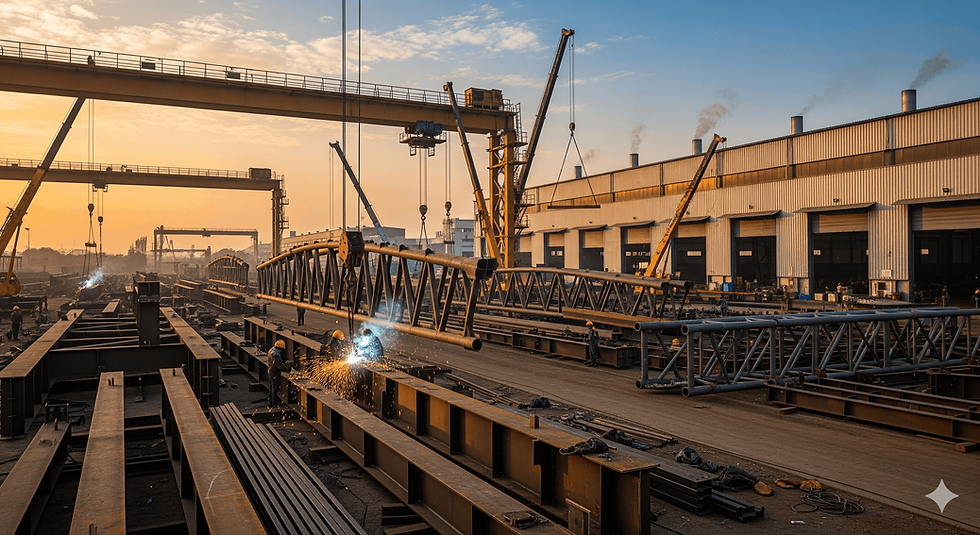
Surat's reputation as a bustling economic powerhouse is well-established, built on the foundations of its thriving textile and diamond industries. However, beneath this shimmering surface lies another critical sector driving its growth: industrial manufacturing. At the core of this industrial boom is the advanced practice of structural steel fabrication in Surat. This essential service provides the backbone for the city's expanding infrastructure, from towering commercial complexes to sprawling industrial facilities. For any business looking to build, expand, or innovate in this dynamic region, understanding the landscape of structural steel fabrication is not just beneficial—it's crucial for success.
This guide will explore the world of steel fabrication within Surat. We will cover the intricate processes that transform raw steel into precise components, the quality standards that ensure safety and longevity, and the factors you must consider when selecting a fabrication partner. By understanding these elements, you can leverage the city's manufacturing prowess to ensure your project is built on a foundation of strength, precision, and quality.
Why Surat is a Hub for Structural Steel Fabrication
Surat’s strategic location in Gujarat, one of India's most industrialized states, provides it with significant logistical advantages. Excellent connectivity via road, rail, and sea ports simplifies the procurement of raw materials and the distribution of finished products. This geographical benefit, combined with a pro-business environment, has cultivated a robust ecosystem for heavy industries.
Over the years, the city has become home to numerous manufacturing units, creating a high demand for reliable construction and infrastructure. This demand has fueled the growth of a specialized and highly skilled structural steel fabrication industry. Local fabricators have honed their expertise by serving a diverse range of sectors, including:
Industrial & Manufacturing: Building warehouses, processing plants, and factory sheds.
Commercial Real Estate: Constructing shopping malls, office buildings, and high-rise towers.
Infrastructure Projects: Fabricating components for bridges, flyovers, and public utilities.
Energy & Petrochemicals: Supplying structural supports for refineries and power plants.
This diverse experience means that fabricators in Surat are equipped to handle complex projects that demand precision, durability, and adherence to strict timelines.
The Structural Steel Fabrication Process Explained
Structural steel fabrication is a multi-stage process where raw steel materials are transformed into finished components ready for assembly on a construction site. Each step requires a combination of skilled labor, advanced machinery, and meticulous quality control.
Step 1: Design and Engineering
Before any metal is cut, a project begins at the design stage. Using sophisticated software like CAD (Computer-Aided Design) and BIM (Building Information Modeling), engineers and detailers create precise shop drawings. These drawings serve as the blueprint for the fabrication team, outlining every cut, bend, and weld required. This digital-first approach minimizes errors, optimizes material usage, and ensures that every component will fit perfectly during final assembly.
Step-2: Cutting and Shaping the Steel
Once the designs are finalized, the raw steel sections (like I-beams, channels, and plates) are moved to the cutting floor. Modern fabricators use a variety of high-precision methods to cut the steel to the required shapes and sizes.
Shearing: A mechanical process used for making straight cuts on flat steel plates.
Sawing: High-speed band saws are used to cut through thicker sections like beams and columns.
Plasma Cutting: Utilizes a jet of hot plasma to cut through steel with high speed and accuracy, suitable for complex shapes.
Laser Cutting: Offers the highest level of precision, ideal for intricate designs and tight tolerances.
After cutting, the steel may need to be bent or rolled to achieve curved shapes, a process accomplished using powerful press brakes and rolling machines.
Step 3: Welding and Component Assembly
This is where individual pieces of cut and shaped steel are joined together to form larger components. Welding is a critical stage that determines the overall strength and integrity of the structure. Skilled welders, certified in various techniques like MIG (Metal Inert Gas) and TIG (Tungsten Inert Gas), meticulously follow the shop drawings to fuse the parts.
Jigs and fixtures are often used to hold the pieces in the correct position during welding, ensuring dimensional accuracy. The quality of the welds is paramount, and they are often subjected to rigorous inspection to ensure they are free from defects.
Step 4: Finishing and Quality Assurance
After assembly, the fabricated components undergo finishing treatments to protect them from corrosion and prepare them for their final environment.
Shot Blasting: The surface of the steel is blasted with abrasive particles to remove any mill scale, rust, or impurities. This creates a clean, rough surface profile that is ideal for coating adhesion.
Painting/Coating: A primer and one or more topcoats of industrial-grade paint are applied. This provides a crucial barrier against moisture and environmental elements, preventing rust and extending the structure's lifespan. In some cases, galvanizing (coating the steel with zinc) is used for maximum corrosion protection.
Throughout every stage, a dedicated quality assurance team conducts inspections. They check dimensions against the drawings, verify weld quality through non-destructive testing (NDT), and measure the thickness of the paint coating.
Choosing the Right Partner for Structural Steel Fabrication in Surat
Selecting the right fabricator is one of the most important decisions you will make for your construction project. The quality of their work directly impacts your project's safety, timeline, and budget. Here are key factors to consider when evaluating potential partners for structural steel fabrication in Surat.
Technical Expertise and Experience
Look for a fabricator with a proven track record in projects similar to yours. Ask for case studies or a portfolio of their completed work. An experienced company will not only have the technical skills but will also be able to foresee potential challenges and offer effective solutions. Their team of engineers, welders, and technicians should be certified and well-versed in the latest industry standards.
Manufacturing Capacity and Technology
Assess the fabricator's workshop. Do they have modern, well-maintained equipment? A facility equipped with CNC (Computer Numerical Control) machines for cutting and drilling demonstrates a commitment to precision and efficiency. Their overall capacity is also important—ensure they can handle the volume of your project without compromising on quality or falling behind schedule. A large, organized workshop is often a good indicator of a professional operation.
Commitment to Quality Standards
Quality should never be negotiable. A reputable fabricator will have a robust quality management system in place. Ask about their quality control processes, from material inspection upon arrival to final checks before dispatch. Inquire about their certifications (like ISO 9001) and their methods for non-destructive testing. This commitment to quality ensures the structural integrity and long-term safety of your building.
Project Management and Communication
Effective project management is essential for a smooth fabrication process. Your chosen partner should provide a single point of contact who can give you regular updates on progress. Clear communication helps prevent misunderstandings and ensures that the project stays on track. They should be transparent about their timelines and proactive in addressing any issues that arise.
The Future of Steel Fabrication in Surat
The demand for high-quality structural steel is only set to increase as Surat continues its impressive growth trajectory. The industry is evolving, with greater adoption of automation, robotics, and advanced BIM integration. Fabricators who invest in these technologies will be better positioned to deliver projects with even greater speed, accuracy, and cost-effectiveness.
Furthermore, there is a growing emphasis on sustainability. Steel is an inherently recyclable material, and modern fabrication practices focus on minimizing waste and using environmentally friendly coatings. As businesses become more conscious of their environmental footprint, partnering with a fabricator that shares these values will become increasingly important.
Conclusion: Building Surat's Future on a Steel Foundation
Structural steel fabrication is an industry built on precision, strength, and trust. In a rapidly developing city like Surat, these qualities are essential for building the infrastructure that will support its future growth. From massive industrial plants to iconic commercial landmarks, the work of skilled steel fabricators is visible across the city's skyline.
When embarking on your next construction project, choosing the right fabrication partner is paramount. By prioritizing technical expertise, manufacturing capability, and an unwavering commitment to quality, you can ensure your project is built to last. The network of experienced professionals providing structural steel fabrication in Surat offers the technical skill and industrial capacity needed to turn ambitious architectural visions into strong, durable realities.
Comments